Why Your Legs Feel Like Concrete by 3 P.M.
Your heart has a central pump. Your lymphatic system relies on movement. What researchers have found about leg swelling, the muscle nicknamed your "second heart", and why standing up isn't the fix most people think it is.
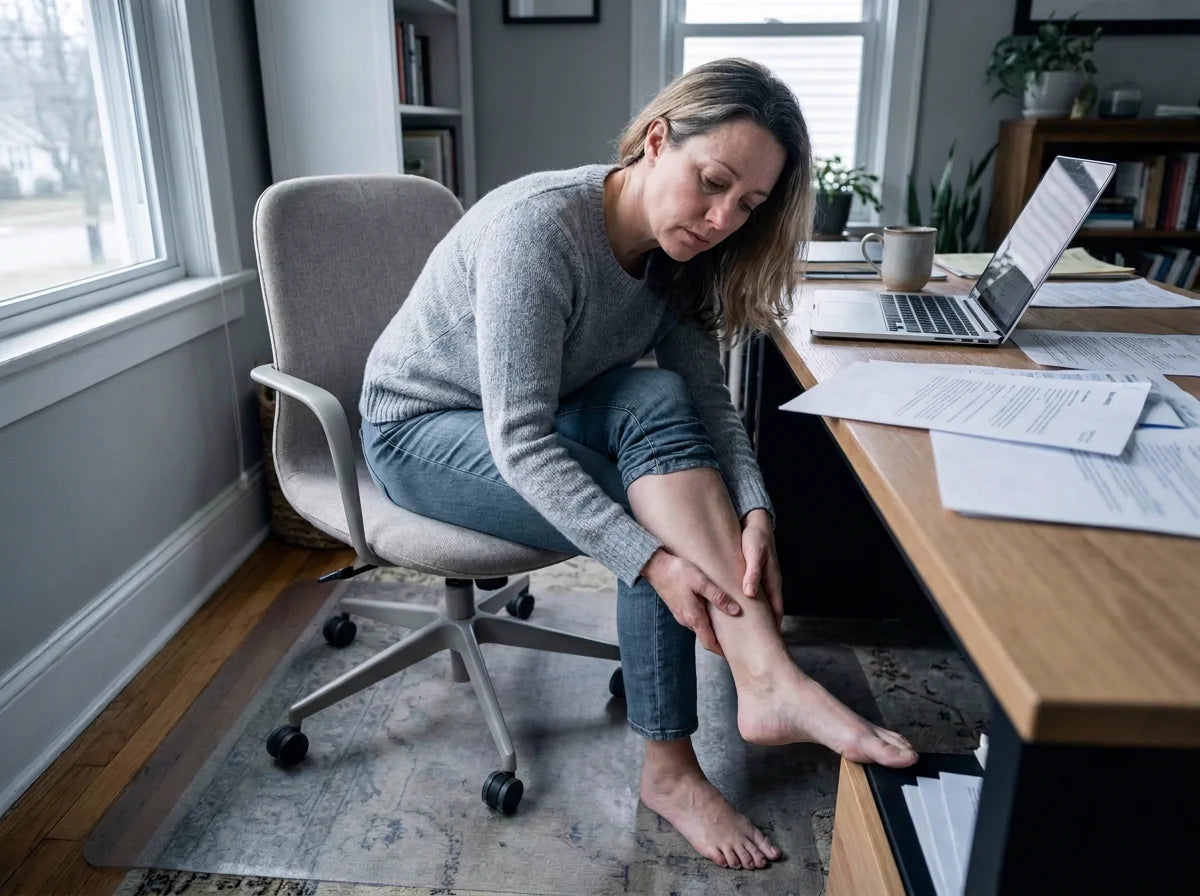
It's 3 p.m.
You stand up from your chair, and your legs feel heavy. Not sore, not injured. Just heavy, like someone filled them with wet sand while you were answering emails.
By dinner, your jeans feel tighter than they did this morning. When you take your socks off at night, there are red lines around your ankles. And some mornings, your face looks puffy in the mirror, even after a full night's sleep.
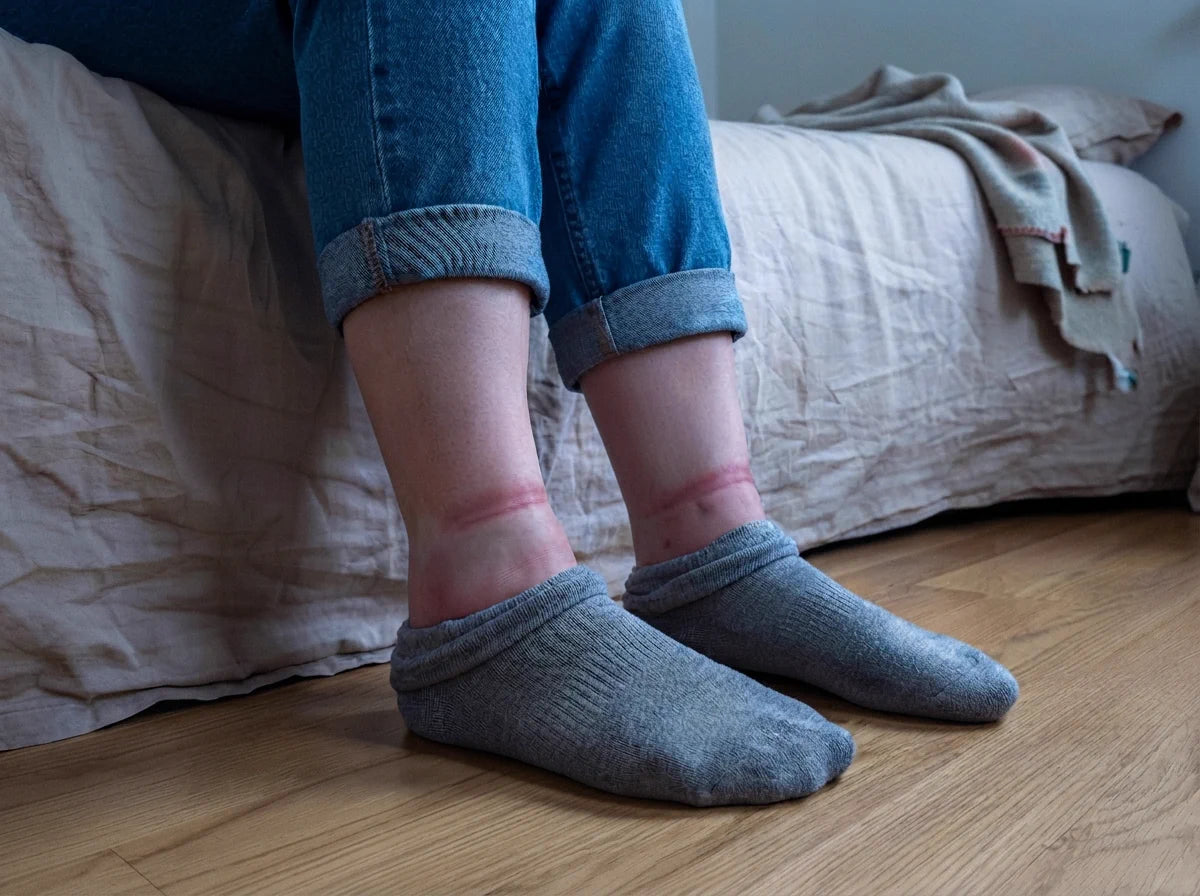
It's not just a feeling in your legs. It's the summer dress you leave in the closet because of your ankles. The evenings when you're too drained to do anything but sit on the couch, when you wanted to cook, go for a walk, or simply enjoy your evening.
Most people blame age, or a long day, and move on. But there's a simpler explanation that almost nobody talks about. It starts with a strange fact about your body.
In a hurry? See what helps ↓
Your body has a fluid system with no central pump
Your heart pumps blood around your body all day, without you thinking about it.
But you have a second fluid system that has no central pump like the heart: your lymphatic system. Its job is to collect extra fluid from your tissues and bring it back toward your bloodstream. And to keep that fluid moving, especially up from your legs, it depends heavily on the muscles around it.
Your legs actually clear fluid in two ways: through your veins, which carry blood back up to your heart, and through your lymphatic vessels. Both depend heavily on the muscles around them.
In other words: when your leg muscles move, fluid moves more easily. When they don't, it has a harder time leaving your lower legs.
The muscle nicknamed your "second heart"
In your legs, one muscle does a big part of that work: your calf.
Your calf muscles are often called your "second heart". Every time they contract, when you walk, climb stairs, or even shift your feet, they squeeze blood and fluid back up out of your lower legs, against gravity.
But there's a catch: this pump works best when your calves move. At a desk, they barely do. So for hours every day, your second heart is mostly at rest.
Standing up isn't the fix you'd think
The natural reaction is to think: "Then I should just stand more." But standing still has a similar problem. Standing in one place for hours isn't the same as walking: your calves can stay fairly still either way.
Researchers have linked long periods of both sitting and standing still to lower-leg swelling. What makes the difference isn't your position. It's movement.
Even small movements make a difference
Here's the encouraging part. Your legs don't need a gym session to get relief.
In one lab study, people who sat for four hours without moving had more lower-leg swelling than when they broke up that time with short bouts of exercise every hour. The same researchers note that even frequent light activity, like fidgeting, has been found to counter that kind of swelling.
So for many people, that 3 p.m. heaviness may not be just about age. A big part of it can simply be stillness. And a normal work year holds a lot of it: eight hours a day, five days a week, around 48 weeks. That's nearly 2,000 hours a year with your second heart mostly at rest.
Why the usual fixes don't last
If you've lived with heavy legs for a while, you've probably tried to fix it:
- Lymphatic massages. They feel amazing. But at often $100 or more a session, it's hard to book one every week, and the light feeling can fade within a day or two.
- Compression socks. They help many people, but they can feel tight and hot, especially in summer or under a dress.
- Dry brushing. Cheap and pleasant, but it's one more thing to remember every morning, and it's easy to let it slip after a while.
None of these are bad ideas. But they work on your legs from the outside, from time to time. What your second heart benefits from is different: regular movement, ideally every day.


So the real question is
The classic advice is to get up and walk every 30 to 60 minutes. It's good advice, and if you can do it, do it.
But be honest: does your workday really allow that? Meetings, calls, a shift you can't step away from. For most people, getting up every half hour just doesn't happen.
Which leaves one question: how do you get your calves moving every day, without leaving your chair, and without adding a workout you'll never keep up?
What happens when something else does the moving
This is where an idea used in research labs and training settings comes in: vibration.
When you stand on a vibrating platform, or simply rest your feet on it while seated, the vibrations trigger small, automatic contractions in your leg muscles. Your calves get to work, without you having to do anything.
No study has measured lymph flow with a plate like this. But researchers have measured two things that matter here: what vibration does to circulation in the legs, and, in one small trial, what it does to leg swelling.
It can boost circulation in the legs. In a study of 20 healthy adults, a 9-minute session standing on a vibration platform doubled the average speed of blood flow in the artery behind the knee, and increased blood volume in the calf and thigh muscles.
It makes your muscles work, a bit like exercise. In a 2020 study, whole-body vibration increased blood flow in the main artery of the thigh about fourfold, a similar increase to a leg exercise.
Researchers have also looked at it for leg swelling. In a small pilot trial with older adults who spend most of their day seated and live with long-term leg swelling, vibration helped keep the swelling from getting worse, compared with a group that didn't use it. Some participants even did their sessions sitting down.
And the overall picture is positive. A recent review of the research concluded that whole-body vibration generally has a positive effect on blood flow in the limbs.
Meet the Drainaea Ripple
That's exactly the need the Drainaea Ripple fits: a compact vibration plate you can stand on, or use sitting at your desk or on the couch with your feet resting on it, while you work, scroll, or watch your show.
No gym. No changing clothes. No need to interrupt your workday. Just regular movement for your calves, every day.
Imagine your evenings with it
It's 5 p.m. You get up from your desk, and your legs could feel lighter than they used to at this hour.
You put on the dress you'd been avoiding. After dinner, you might have a bit more energy for a walk, or a call with a friend, instead of collapsing on the couch.
And all it asks is a few minutes on the plate, without changing anything else about your routine.
Before you buy any vibration plate, check these 5 things
Many vibration plates are designed for workouts, not for tired legs and long days in a chair. These are the five things we cared about most when choosing the Ripple. Whatever you buy, make sure it passes them.
1. A truly gentle start. If your legs already feel heavy and puffy, you want to start softly and build up. Look for many speed levels, not just a handful.
Ripple: 120 speed levels.
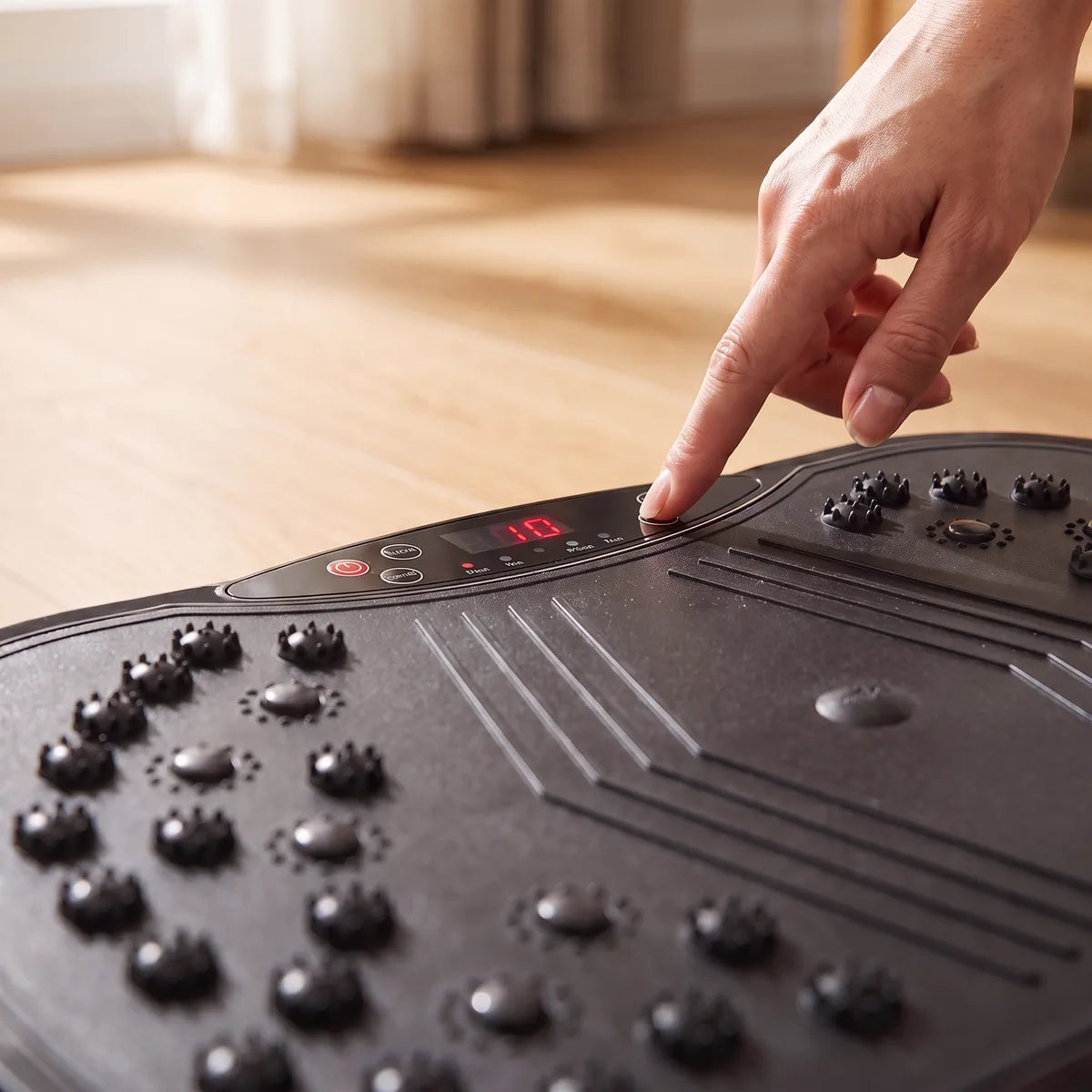
2. Works while you sit. If your days are spent in a chair, you need a plate you can use with your feet resting on it, not one that only works standing.
Ripple: use it standing, or seated with your feet on it.

3. Light enough to use every day. A plate you have to drag out of a closet is a plate you'll stop using.
Ripple: 10 lbs, 18.5 × 12.8 inches, and about 4.7 inches (12 cm) tall, so it fits under many couches and desks.
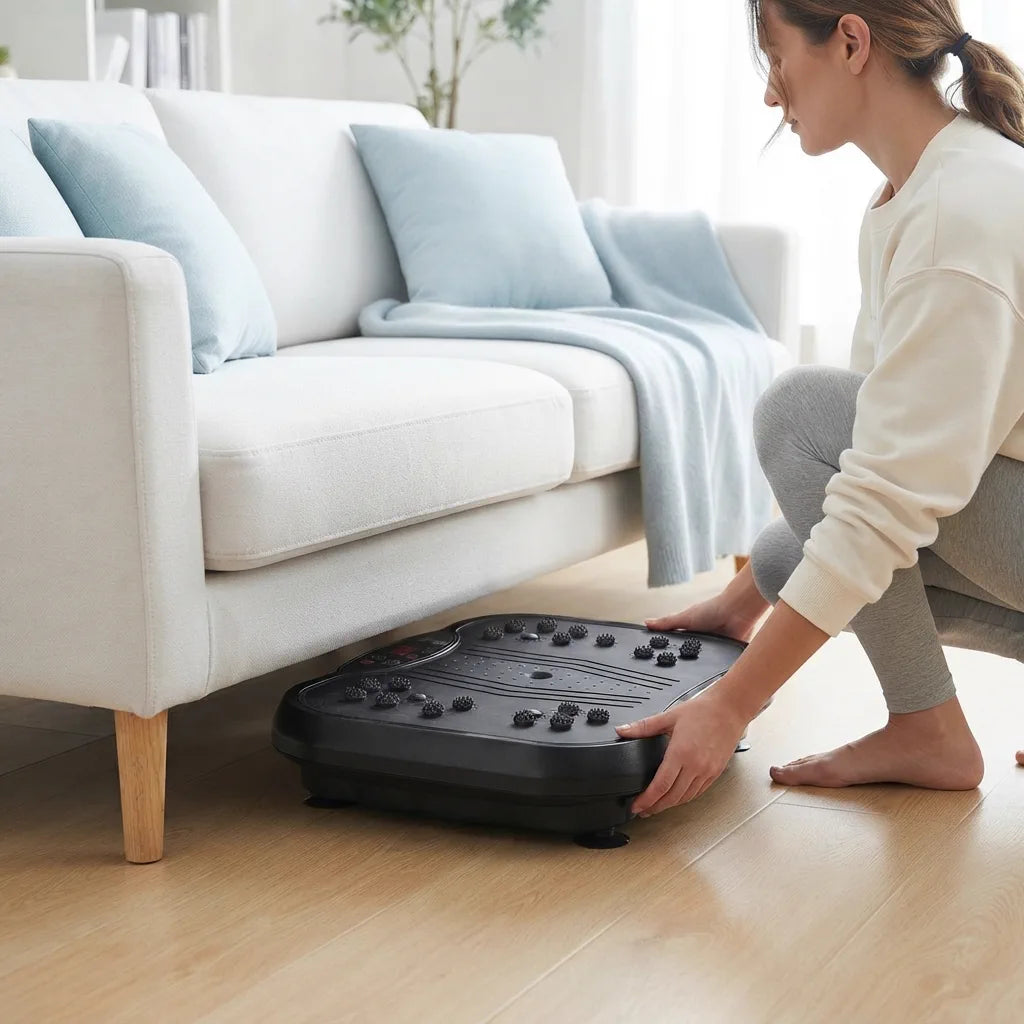
4. Simple enough that you never skip it. The easier a habit is, the more likely you are to keep it.
Ripple: no assembly, three one-touch programs, a timer from 1 to 20 minutes, and a remote.
5. Stable, and backed by real support. A plate that slides around is noisy and uncomfortable, and you want someone to talk to if something goes wrong.
Ripple: four suction cups keep it steady and help limit vibration noise. It holds up to 330 lbs, comes with a 6-month warranty and a 30-day refund handled directly by us (not for you? Email us within 30 days for a full refund), and you can reach us at support@drainaea.com.
How it compares
| Drainaea Ripple | Lymphatic massage | Compression socks | Dry brushing | |
|---|---|---|---|---|
| Cost | $149, once | Often $100+ per session | Low | Low |
| Time | A few minutes, at home | Travel + about an hour | Worn during the day | A few minutes |
| At home | ✅ | Usually not | ✅ | ✅ |
| While sitting or working | ✅ | ❌ | ✅ | ❌ |
| Gets your calf muscles moving | ✅ | ❌ | ❌ | ❌ |
Each option has its place. A good massage gives you hands-on care that a plate can't, and compression helps many people. The Ripple's role is different: daily movement for your calves, without leaving your chair.
A simple routine that fits your day
Morning, with your coffee. Sit at the table or your desk with your bare feet on the plate, pick a gentle program, and drink your coffee.
Evening, during your show. Feet on the plate in front of the TV, at the end of the day when your legs often feel heaviest.
Start at a low speed and keep your first sessions short, then go at your own pace. If anything feels uncomfortable, stop and check with your doctor.


Try the Drainaea Ripple
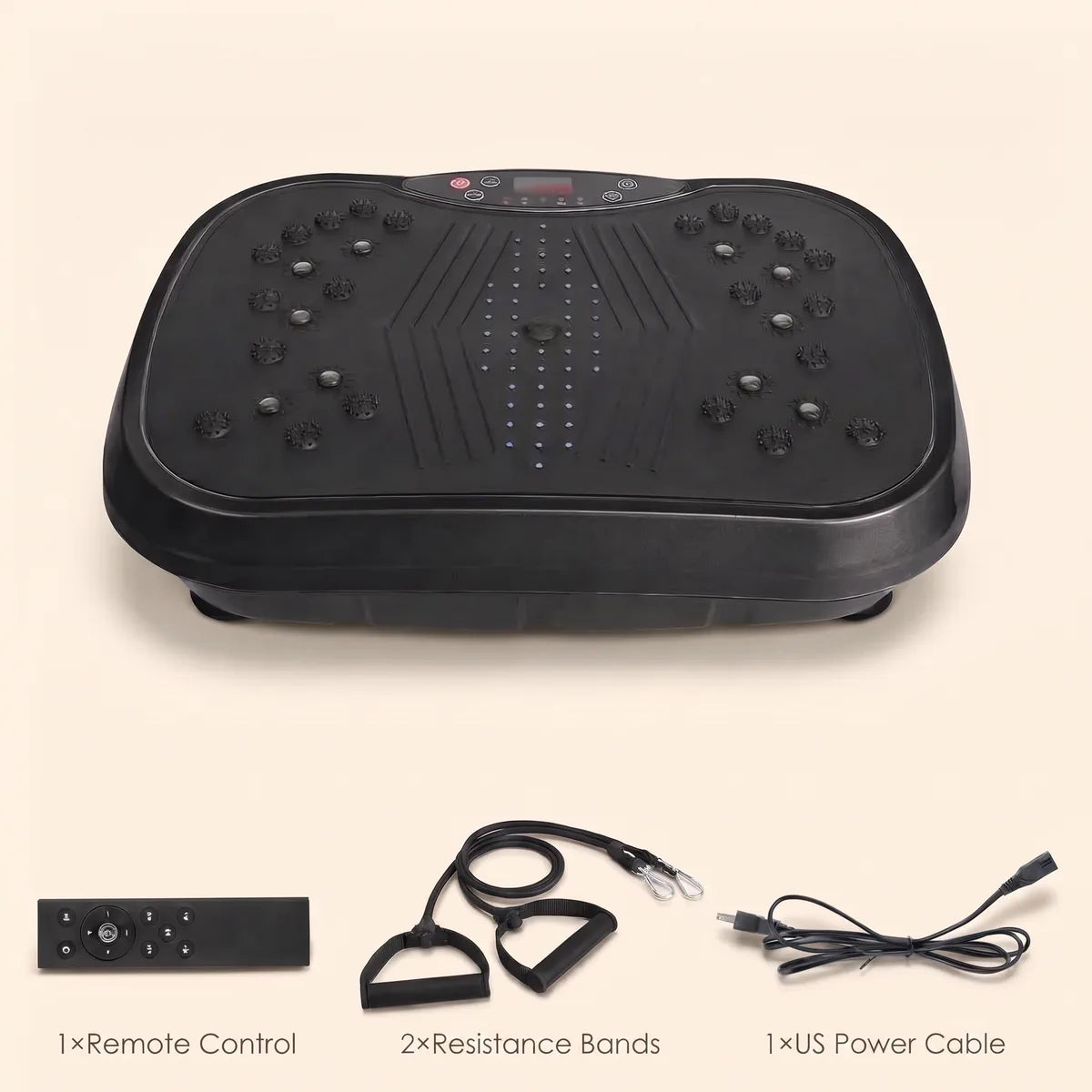
$149, with free tracked shipping. That's about 41 cents a day over a year, or roughly the cost of one or two massage sessions. Eligible customers can also pay in 4 interest-free installments of $37.25 with Shop Pay.
What's in the box: the Ripple vibration plate, a remote control, 2 resistance bands, a US power cable, and the manual. No assembly.
Why order from Drainaea
Free delivery in 4–8 business days · ships from within the US, with tracking
- 🔒 Secure checkout with Shop Pay, Apple Pay, Google Pay, PayPal, and all major cards
- ↩️ 30-Day Refund: not for you? Email us within 30 days for a full refund.
- 🛠️ 6-Month Warranty: broken or not working? We'll take care of you, directly.
- 💬 Real people behind the brand: support@drainaea.com
Questions you might have
Is it only for people who sit all day? No. If you stand in one place for long hours, your calves can stay fairly idle too. You can use the Ripple standing, or sitting with your feet on it when you get home.
Is it loud? You'll hear a hum while it runs, like most vibration plates. Four suction cups keep it steady on the floor and help limit vibration noise, even at higher speeds.
Will it fit in my home? It measures 18.5 × 12.8 inches, weighs 10 lbs, and is about 4.7 inches (12 cm) tall, so it slides under many couches and desks. Just check the space under yours first.
How much weight does it hold? Up to 330 lbs.
How soon will I feel a difference? You'll feel the plate working your legs from the very first session. Beyond that, consistency is what counts: regular use over a few weeks matters more than long sessions. Everyone's body is different, so results vary.
Who should not use it? Talk to your doctor before using any vibration plate if you are pregnant, have a pacemaker or another implanted device, have had a blood clot or deep vein thrombosis, recently had surgery, have epilepsy, or have a heart condition. And if your swelling is sudden, painful, or only in one leg, see a doctor rather than trying to manage it yourself.
How long does delivery take? Most orders arrive in 4 to 8 business days, with tracking, shipped from within the US. You'll see your estimated delivery date before you order.
What if something is wrong with it? If it arrives damaged, contact us within 7 days and we'll replace it or refund you. 30-day refund: not for you? Email us within 30 days for a full refund. If it stops working within 6 months, our warranty covers it. Just email support@drainaea.com.
Why not just buy a cheaper plate online? You'll find plenty of vibration plates online, and some cost less. Whatever you choose, check the five points above: a gentle start, usable sitting down, light enough for daily use, simple to use, stable, and backed by real support.
Your legs don't have to end every day like this
Maybe, for years, you've thought heavy legs were just part of getting older. For many people, a big part of it is simply how still our days have become.
You can keep going the way things are: more evenings with heavy legs, sock marks at night, and puffy mornings. Or you can give your second heart the movement it's been missing, a few minutes at a time, without changing anything else about your day.
If you have a question before you decide, write to us at support@drainaea.com. We read every message.
The Drainaea Team
Free delivery in 4–8 business days
This page is an advertisement for Drainaea. Individual results vary. The Drainaea Ripple is not a medical device and is not intended to diagnose, treat, cure, or prevent any disease. If you have a medical condition, are pregnant, or have concerns about swelling, talk to your doctor before use.